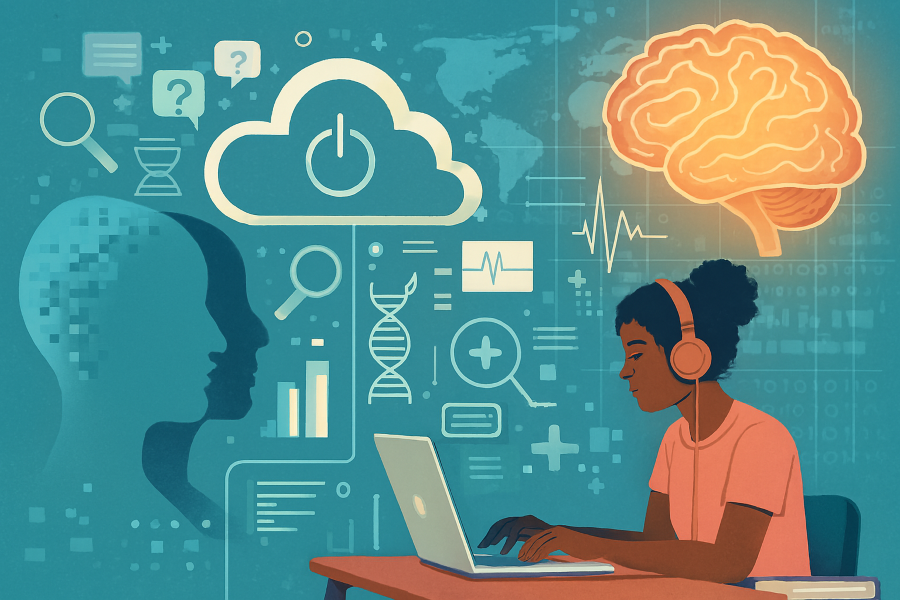
The internet is a primary source of health information, but how well are students equipped to navigate it?
Abstract & Research Objective
In an era of unprecedented access to information, the internet has become a primary resource for university students seeking answers about their mental health. However, this digital landscape is fraught with challenges, from misinformation to the difficulty of discerning credible sources. This quantitative study was designed to analyze the patterns, preferences, and challenges that Nigerian university students face when using online resources for mental health information. The core objective was to build an evidence-based understanding of their digital mental health literacy.
Methodology: A Quantitative Approach
To achieve this, I developed and administered a structured survey to a diverse sample of university students. The survey collected data on several key areas:
- Information Sources: Which platforms do students trust most (e.g., social media, academic websites, health forums, blogs)?
- Evaluation Criteria: How do students determine the credibility of the information they find?
- Help-Seeking Behavior: Does online information influence their decision to seek professional help?
- Perceived Barriers: What challenges (e.g., information overload, privacy concerns) do they encounter?
The collected data was then rigorously analyzed using statistical software (SPSS), employing descriptive statistics and inferential tests to identify significant trends and relationships between variables.
Key Findings
The study revealed a significant gap between students' confidence in their online search abilities and their actual practices for vetting the credibility of mental health information.
Among the key findings were:
- A high reliance on easily accessible but less reliable sources like social media influencers and general forums over curated academic or clinical websites.
- Many students struggled to differentiate between scientifically-backed advice and personal opinion or commercial content.
- A positive correlation was found between consuming high-quality online information and an increased willingness to seek formal psychological support.
Implications for a Digitally-Native Generation
The results of this research carry important implications for university wellness centers, public health advocates, and educators. It highlights an urgent need for targeted interventions to improve digital mental health literacy among students. By equipping them with the skills to critically evaluate online sources, we can empower them to make more informed decisions about their mental well-being and help them navigate the digital world safely and effectively.
This research was conducted as part of my academic work in Health Psychology. I'm Chukwuebuka Samson Ezeh, a researcher and analyst passionate about using data to understand and improve health outcomes. Explore more of my work on my portfolio website.